The dark, the silence, the breath. Your bubble, cut off from the world.
Light, even faint, delays your night
Two hours of screen time before bed cut melatonin production by 55% and delay its onset by around an hour and a half. Your brain still thinks it is daytime, and simply does not prepare for the night.
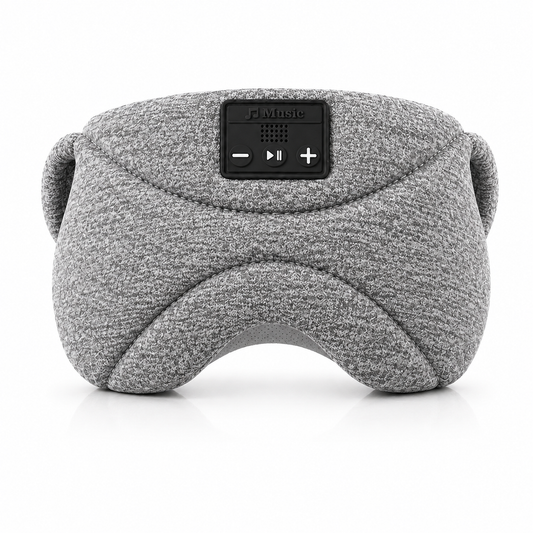
The problem does not stop when the screen goes off. A streetlamp behind the curtain, the red standby light on a device, dawn at five in summer: your eyelids do not block everything, and your brain still registers it.
Not all noise is treated the same way
This is the distinction that changes everything, and almost nobody makes it.
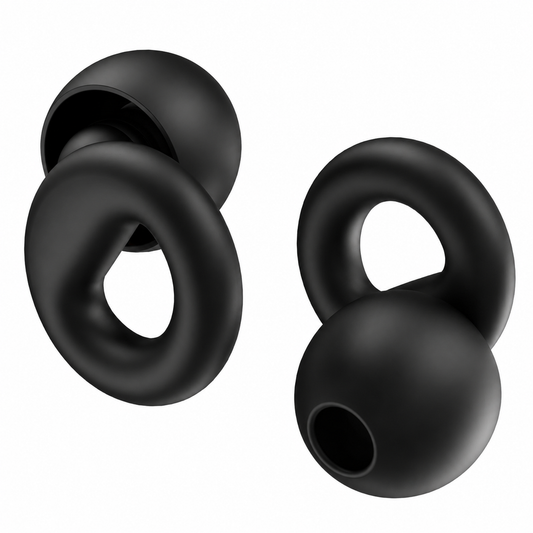
External noise — a neighbour, a street, someone snoring — can be cut. Ear plugs do the job.
Internal noise, such as tinnitus, cannot be cut. It is produced by your own auditory system. In total silence the brain has nothing else to listen to and focuses on it. Blocking your ears amplifies the perception rather than relieving it.
The recognised approach is called sound enrichment: instead of removing sound, you add one — neutral and continuous — that the brain can process instead. The ringing does not disappear, it moves into the background.
Our products are comfort articles. They treat neither tinnitus nor any sleep disorder. If your tinnitus is recent, sudden or one-sided, consult a healthcare professional without delay.
And the noise you make yourself
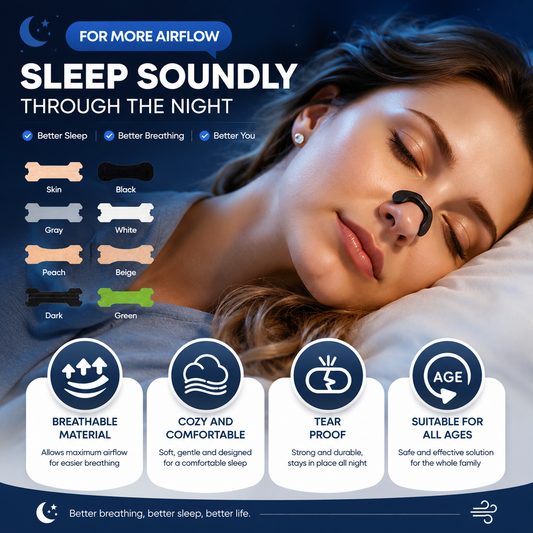
Snoring often starts with a nose that does not let enough air through: the mouth opens to compensate, the throat vibrates. Addressing nasal breathing tackles the cause rather than the effect — but persistent snoring, with breathing pauses or daytime fatigue, calls for medical advice.
Read more
Tinnitus: why ear plugs can make your nights worse
Screens steal 90 minutes of sleep a night
The racing mind: why your brain refuses to switch off

 Sold out