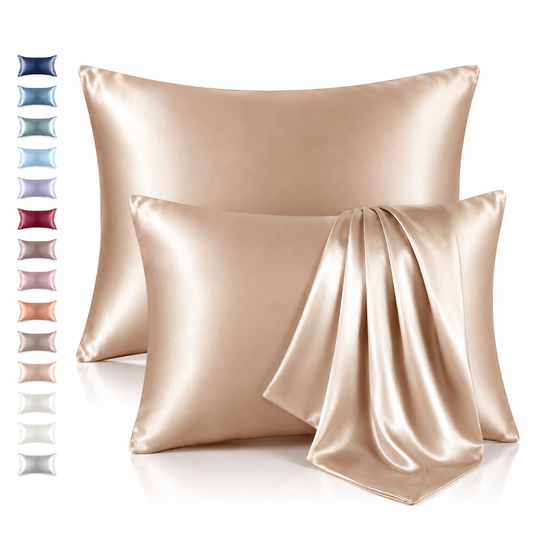
Collection: Cool & Calm Nights
The coolness and the quiet that let you slide into sleep.
To sleep, the body has to cool down
Sleep is not triggered because it is dark. It is triggered because your core temperature falls by about one degree. And what matters is not the temperature reached but the speed of the fall: anything that slows that cooling delays sleep onset, however exhausted you are.
That is also why an overheated bedroom does more than bother you. It stops the biological signal from firing.
The moment your body stops regulating
During REM sleep — the dreaming phase, the one that consolidates memory — the body suspends thermoregulation. It stops sweating, stops shivering.
During those phases your temperature depends entirely on what surrounds you: the sheet, the blanket, the pillow. Nothing else. Bedding that holds heat in therefore comes for your sleep at the exact moment you are most vulnerable.
Heat comes from more than one direction
This is the most common mistake: you change the duvet and nothing improves. Of course — heat reaches you by several routes.
From above, the duvet traps warm air and moisture. Under your head, the pillow is the longest, densest point of contact of the night — hence the universal reflex of hunting for the cool side. Treating one route leaves the other working against you.
Why we do not use gel
Gel gives an immediate cool sensation, spectacular at bedtime. Then it absorbs all the heat it can hold and turns lukewarm after twenty to thirty minutes — precisely as you enter deep sleep.
3D mesh does not cool in one burst: it vents continuously. Less impressive when you lie down, far more useful at three in the morning.
Read more
Waking up drenched: what your body is trying to do
You slept 8 hours and you are exhausted

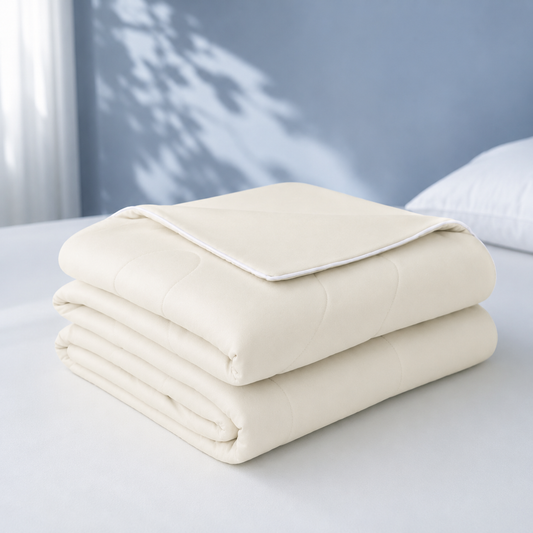 Sold out